

As the first rays of spring sunshine peek through the clouds, the vibrant colors of fresh vegetables beckon to be transformed into a delightful spring vegetable risotto. Imagine creamy Arborio rice slowly absorbing the essence of sautéed asparagus, peas, and tender snap peas, each bite bursting with freshness and warmth that feels like a hug on a sunny day. This dish not only tantalizes your taste buds but also fills your kitchen with an irresistible aroma that invites everyone to gather around the table.
I still remember the first time I made this dish during a family gathering; it was an impromptu decision that turned into a delicious memory filled with laughter and second servings. Perfect for celebrating the arrival of spring or simply enjoying a cozy dinner at home, this risotto promises an unforgettable flavor experience that will keep you coming back for more. So grab your wooden spoon and prepare to whisk up some magic with this creamy delight!
Why Is Spring vegetable risotto So Irresistibly Good?
Creamy delight: This Spring vegetable risotto delivers a rich, velvety texture that makes every bite feel indulgent.
Fresh flavors: Packed with vibrant asparagus, sweet peas, and tender spinach, each ingredient shines through in this dish.
Quick to make: With just 15 minutes of prep and 30 minutes of cooking, you can enjoy a gourmet meal without spending hours in the kitchen.
Versatile option: Perfect as a main course or a side dish, it pairs beautifully with grilled proteins or can stand alone for a satisfying vegetarian meal.
Crowd pleaser: Whether you’re serving family or hosting friends, this risotto is sure to impress everyone at your table!
Spring vegetable risotto Ingredient List
For the Vegetables
- 1 cup Asparagus (chopped) – Fresh asparagus adds a delightful crunch and vibrant flavor that’s perfect for spring.
- 1 cup Peas (fresh or frozen) – Sweet peas bring a burst of color and sweetness to your risotto.
- 1 cup Spinach (fresh) – Fresh spinach adds a nutritious boost and lovely green hue to your dish.
For the Rice
- 1 cup Arborio rice – This short-grain rice is essential for achieving that creamy texture characteristic of risotto.
For the Broth
- 4 cups Vegetable broth (warm) – Using warm broth helps maintain the cooking temperature and allows the flavors to meld beautifully.
For the Seasoning
- 1 cup Parmesan cheese (grated) – Grated Parmesan adds richness and depth, making your spring vegetable risotto truly unforgettable.
- 2 tablespoons Olive oil – A touch of olive oil enhances the flavors while keeping everything nice and creamy.
- 1 teaspoon Salt – Salt brings out all the natural flavors of your fresh vegetables.
- 1 teaspoon Black pepper – Freshly ground black pepper adds a hint of warmth and spice to balance the creaminess.
Step-by-Step Spring vegetable risotto
1. Heat olive oil in a saucepan over medium heat.
Drizzle in those two tablespoons of olive oil, letting it warm up beautifully while you savor the lovely aroma filling your kitchen.
2. Toast Arborio rice for flavor.
Add 1 cup of Arborio rice and stir for about 2 minutes until lightly toasted, allowing the grains to absorb that rich olive oil flavor.
3. Add warm vegetable broth gradually.
Begin adding the 4 cups of warm vegetable broth, one ladle at a time, stirring frequently to create that creamy texture we all love in a risotto.
4. Incorporate asparagus and peas.
After about 15 minutes of stirring and simmering, gently fold in 1 cup of chopped asparagus and 1 cup of peas—fresh or frozen—for a burst of color and crunch.
5. Stir until creamy and al dente.
Continue to add broth as needed while stirring until the rice is creamy yet al dente, usually around 30 minutes total cooking time—a perfect balance!
6. Mix in spinach and Parmesan cheese.
Finally, stir in 1 cup of fresh spinach and 1 cup of grated Parmesan cheese. Season with salt and pepper to taste for that final touch of flavor.
Optional: Garnish with extra Parmesan or a sprinkle of fresh herbs for added flair!
Exact quantities are listed in the recipe card below.
Pro Tips for Spring vegetable risotto
- Fresh Vegetables Matter: Use the freshest asparagus, peas, and spinach to enhance the vibrant flavors of your spring vegetable risotto.
- Toasting the Rice: Don’t skip toasting the Arborio rice for two minutes; this step adds a nutty depth that elevates the dish.
- Add Broth Gradually: Always add warm broth one ladle at a time. This ensures that the rice cooks evenly and achieves that creamy consistency.
- Timing is Key: Introduce the asparagus and peas after about 15 minutes to prevent them from overcooking and losing their color.
- Creamy Finish: Stir in Parmesan cheese while the risotto is still warm for a luxuriously creamy texture; this is crucial for a perfect spring vegetable risotto.
- Taste Before Serving: Always taste and adjust seasoning with salt and pepper before serving; fresh ingredients can vary in flavor intensity.
How to Store and Freeze Spring vegetable risotto
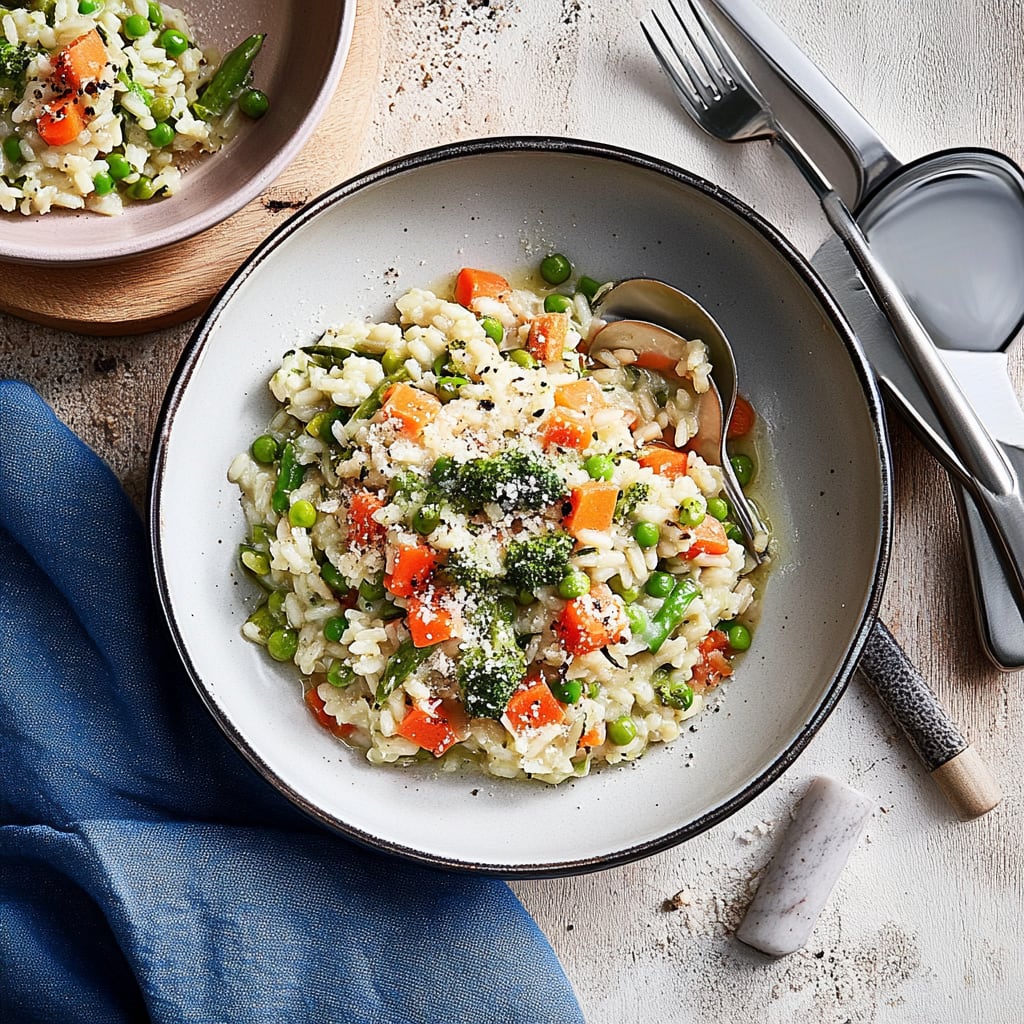
- Fridge: Store leftover Spring vegetable risotto in an airtight container for up to 3 days. This keeps it fresh and creamy for your next meal.
- Freezer: For longer storage, freeze the risotto in portions for up to 2 months. Use freezer-safe bags or containers, removing as much air as possible.
- Reheating: Thaw frozen risotto overnight in the fridge. Reheat gently on the stove with a splash of vegetable broth to restore creaminess.
- Avoiding Spoilage: Keep fresh vegetables like asparagus and spinach separate until you’re ready to use them, as they can spoil more quickly than the rice and broth.
Spring vegetable risotto Your Way
Feel free to explore these delicious variations that will elevate your dish and delight your taste buds.
- Herb-Infused: Add fresh herbs like basil or dill for a fragrant twist. They brighten the flavors and bring a garden freshness to each bite.
- Lemon Zest: Incorporate the zest of one lemon to enhance the dish with a bright, tangy flavor. The citrus notes will complement the spring vegetables beautifully.
- Mushroom Medley: Sauté sliced mushrooms before adding them to the risotto for an earthy flavor. This addition adds depth and a lovely umami richness.
- Creamy Vegan: Swap Parmesan with nutritional yeast and add coconut cream for a rich, dairy-free experience. You’ll still achieve that delightful creaminess without any animal products.
- Spicy Kick: Toss in red pepper flakes while cooking for a subtle heat. This little touch can transform your risotto into a warm embrace of flavors.
- Nutty Finish: Stir in toasted pine nuts or chopped walnuts just before serving for added crunch. Their nutty essence complements the soft texture of the rice perfectly.
- Roasted Veggies: Roast your asparagus, peas, and spinach before mixing them in for a caramelized flavor boost. This method deepens their natural sweetness and adds an irresistible texture contrast.
Make Ahead Options
If you’re looking to streamline your cooking process, this Spring vegetable risotto is a delightful candidate for meal prep. You can chop the asparagus, peas, and spinach up to 24 hours in advance, ensuring you have fresh ingredients ready to go. Furthermore, the Arborio rice can be pre-measured and stored for up to a week, while the vegetable broth can be warmed just before cooking. To get a head start on the actual cooking, heat olive oil and toast the rice in advance; simply set it aside until you’re ready to add the warm broth. When you’re ready to enjoy this creamy dish, just combine everything on the stove—add your prepped vegetables after about 15 minutes of stirring in the broth—and finish with Parmesan cheese. This approach not only saves time but also maximizes flavor in your Spring vegetable risotto!
Spring vegetable risotto Recipe FAQs
What types of vegetables work best for spring vegetable risotto?
Fresh asparagus, peas, and spinach are perfect for this dish, as they provide vibrant flavors and colors that celebrate spring. You can also experiment with other seasonal veggies like zucchini or bell peppers if you want to mix things up!
Can I make this risotto with brown rice instead of Arborio?
While Arborio rice is traditionally used for its creamy texture, you can try using brown rice for a healthier option. Just keep in mind that it will require more cooking time—around 45 minutes—and the texture won’t be as creamy.
How can I store leftover spring vegetable risotto?
If you have any leftovers, allow the risotto to cool completely before transferring it to an airtight container. It will keep well in the refrigerator for up to 3 days. Just reheat gently on the stove with a splash of broth or water to restore some moisture.
Can I freeze spring vegetable risotto?
Yes, you can freeze it! Allow the risotto to cool and then portion it into freezer-safe containers. It should maintain its quality for about 1–2 months. When you’re ready to enjoy it again, thaw it overnight in the fridge and reheat on low heat.
What should I do if my risotto turns out too dry?
If your risotto ends up too dry, don’t fret! Simply add a bit more warm vegetable broth—about half a cup—and stir until it’s creamy again. This dish is all about achieving that luscious consistency, so feel free to adjust as needed!
Is this recipe suitable for vegetarians?
Absolutely! This spring vegetable risotto is entirely vegetarian-friendly since it uses vegetable broth and Parmesan cheese. If you’re looking for a vegan alternative, just swap in nutritional yeast for the cheese and ensure your broth is plant-based!
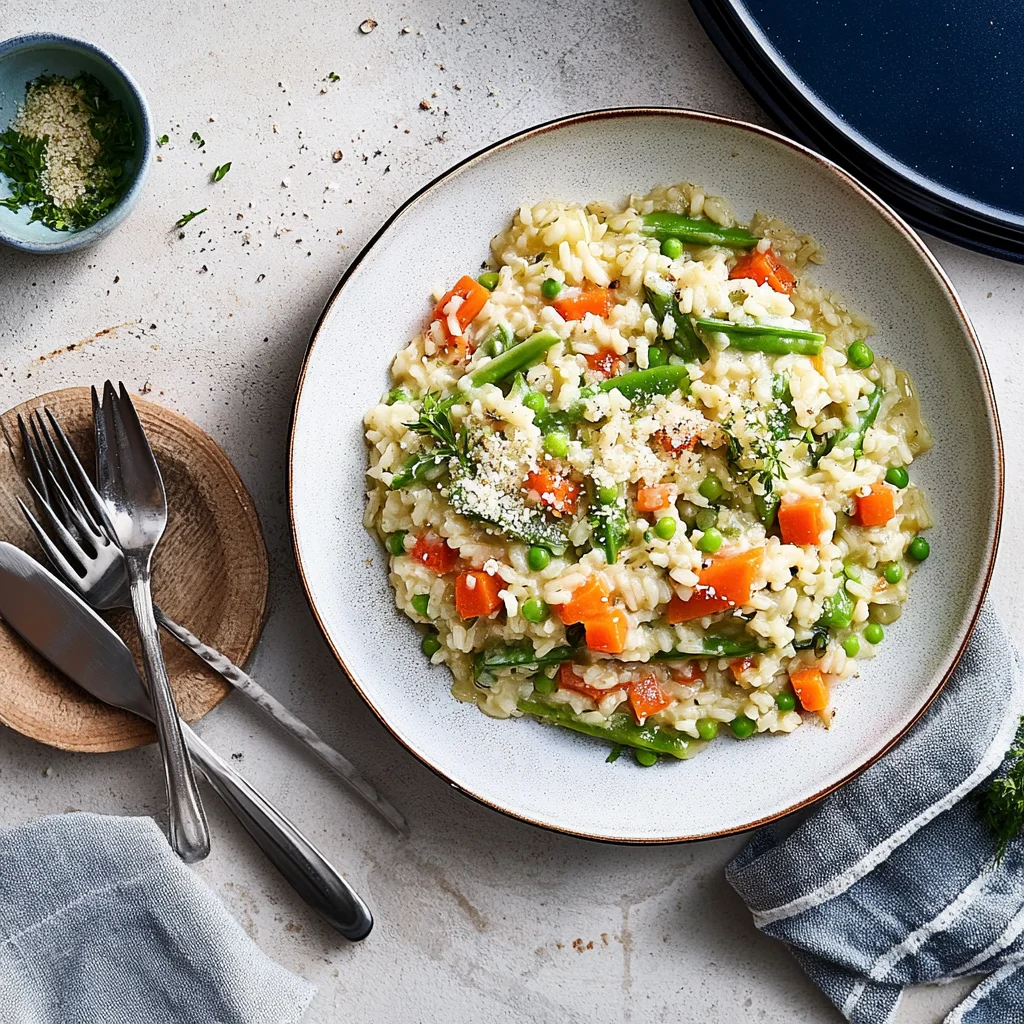
Spring Vegetable Risotto
Ingredients
Method
- Heat olive oil in a saucepan over medium heat.
- Add Arborio rice and stir for 2 minutes until lightly toasted.
- Gradually add warm vegetable broth, one ladle at a time, stirring frequently.
- After about 15 minutes, add asparagus and peas.
- Continue to stir and add broth until rice is creamy and al dente.
- Stir in spinach and Parmesan cheese, and season with salt and pepper.