

It’s time to roll into the world of Tamagoyaki, where eggs become a culinary masterpiece! Imagine a dish that is fluffy, slightly sweet, and as golden as a summer sunbeam. This Japanese rolled omelet is not just breakfast; it’s an art form that dances in your mouth and leaves you smiling like a kid in a candy store.
Picture this: you’re at a cozy Japanese restaurant, the aroma of soy sauce and dashi wafting through the air. The chef skillfully flips layers of egg that shimmer with anticipation. You take your first bite, and it’s like a hug from the inside. Whether it’s breakfast for dinner or a sophisticated brunch dish, Tamagoyaki is always a crowd-pleaser. Trust me, once you master this delectable treat, you’ll find every excuse to whip it up!
Why You'll Love This Recipe
- Tamagoyaki is surprisingly easy to prepare at home, making it perfect for both novice cooks and seasoned chefs.
- Its flavor profile combines sweetness with umami for a taste explosion.
- The vibrant yellow color adds visual appeal, making any plate look gourmet.
- Plus, it’s incredibly versatile; enjoy it warm or chilled, in sushi rolls or as part of a bento box!
Ingredients for Tamagoyaki (Japanese Rolled Omelet)
Here’s what you’ll need to make this delicious dish: delicious appetizer pairing.
- Eggs: Use fresh large eggs for the best flavor and texture; about four should do nicely.
- Soy Sauce: A splash of soy sauce adds depth to your Tamagoyaki; opt for low-sodium if you’re watching your salt intake.
- Dashi Stock: This Japanese soup stock brings umami goodness; you can use store-bought or make your own from kombu and bonito flakes. warm comforting soup option.
- Sugar: Just a teaspoon of sugar balances the savory notes and enhances the sweetness of the eggs.
- Vegetable Oil: For cooking, choose an oil with a high smoke point, like canola or grapeseed oil, to prevent sticking.
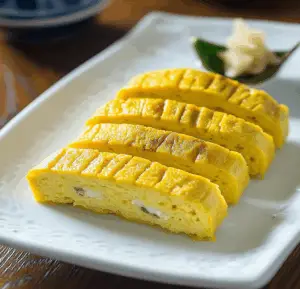
How to Make Tamagoyaki (Japanese Rolled Omelet)
Follow these simple steps to prepare this delicious dish:
Step 1: Prepare Your Egg Mixture
Crack four large eggs into a bowl and whisk them well until they are fully blended. Add one tablespoon of soy sauce, one tablespoon of dashi stock, and one teaspoon of sugar. Mix until combined—think of your whisk as a tiny tornado whipping up happiness!
Step 2: Heat Your Pan
Place a nonstick skillet over medium heat and add just enough vegetable oil to coat the bottom lightly. Wait until the oil shimmers like it’s ready for its close-up.
Step 3: Pour in the Egg Mixture
Pour a portion (about one-third) of your egg mixture into the pan. Quickly tilt the pan to spread the eggs evenly across the surface—this is where you start feeling like an egg-flipping ninja!
Step 4: Roll It Up
As soon as the edges begin to set (in about two minutes), use chopsticks or a spatula to gently lift one edge and roll it towards the other side. Don’t worry if it doesn’t look perfect; remember, we’re going for delicious here!
Step 5: Add More Egg Mixture
Push your rolled omelet back to one side of the pan. Pour another third of your egg mixture into the empty space. Let it cook until almost set and then repeat the rolling process.
Step 6: Finish It Off
Once all your egg mixture has been rolled up into layers of golden delight (and you’ve done some impressive flipping), transfer your Tamagoyaki onto a cutting board. Let it cool slightly before slicing into bite-sized pieces.
Serve on its own or as part of a bento box; either way, you’ve just created something that would make any Japanese grandmother proud! Drizzle with extra soy sauce or serve alongside pickled vegetables for that authentic touch.
Enjoy making this delightful dish!
You Must Know
- This delightful Tamagoyaki (Japanese Rolled Omelet) not only elevates your breakfast game but also makes for a stunning dish at any meal.
- Its vibrant layers and delicate sweetness will have everyone asking for seconds.
- Versatile enough for breakfast, lunch, or dinner, it’s a true crowd-pleaser.
Perfecting the Cooking Process
To achieve the perfect Tamagoyaki, start by whisking the eggs with your chosen seasonings. Heat your pan and lightly oil it, then pour in a thin layer of egg. As it cooks, lift the edges to let uncooked egg flow underneath. Roll it up and repeat until you’ve built multiple layers.
Add Your Touch
Feel free to experiment with fillings! Add finely chopped green onions, a sprinkle of nori, or even a dash of soy sauce for extra flavor. You can swap out regular eggs for quail eggs if you want to impress your guests with something fancy and unique.
Storing & Reheating
Store leftover Tamagoyaki in an airtight container in the fridge for up to three days. To reheat, simply place it in a pan over low heat until warmed through or microwave it briefly, keeping an eye on it so it doesn’t get rubbery.
Chef's Helpful Tips
- For perfectly fluffy Tamagoyaki, use room temperature eggs; they blend better.
- Avoid overcooking the layers; remove from heat as soon as they are set to keep them tender.
- Practice rolling with paper towels before using chopsticks for easier handling.
Sometimes I whip up Tamagoyaki for brunch gatherings, and I always get compliments! My friends still talk about that one time I added too much soy sauce—let’s just say we learned a valuable lesson about moderation!
FAQs:
What is Tamagoyaki (Japanese Rolled Omelet)?
Tamagoyaki is a traditional Japanese dish that consists of a rolled omelet, prepared by layering thin sheets of egg in a rectangular pan. The unique flavors come from a combination of soy sauce, mirin, and sugar, giving it a sweet and savory profile. This dish is often served in sushi restaurants or enjoyed as part of a bento box. Its delicate texture and rich taste make it popular among both locals and visitors.
How do you make the perfect Tamagoyaki?
To create the perfect Tamagoyaki, whisk eggs with soy sauce, mirin, and a touch of sugar until smooth. Heat a rectangular frying pan, adding oil to prevent sticking. Pour in a thin layer of the egg mixture, swirling it to cover the pan. As it cooks, roll the omelet towards you and repeat this process until all the mixture is used. The key to success lies in controlling the heat and ensuring even cooking for a beautifully layered result.
Can I customize Tamagoyaki with different ingredients?
Absolutely! While traditional Tamagoyaki uses basic ingredients like eggs and seasonings, you can add vegetables like green onions or carrots for added flavor and nutrition. Some people enjoy incorporating seafood or cheese into their rolls as well. Be creative with your fillings while maintaining the core technique for rolling; your personalized Tamagoyaki will be both delicious and unique.
How should I serve Tamagoyaki?
Tamagoyaki can be enjoyed in various ways. Serve it warm or at room temperature as part of a Japanese breakfast or lunch. It pairs wonderfully with rice and pickled vegetables or can be cut into bite-sized pieces for appetizers. For an elegant presentation, place slices on top of sushi rice or include them in bento boxes alongside other dishes for color and flavor contrast.
Conclusion for Tamagoyaki (Japanese Rolled Omelet):
Tamagoyaki (Japanese Rolled Omelet) is a delightful dish that showcases the beauty of Japanese cuisine through its simple yet sophisticated flavors. With its fluffy texture and sweet-savory balance, this rolled omelet makes an excellent addition to any meal. savory vegetarian protein options By mastering the technique of layering eggs in a rectangular pan, you can create your own customized version of this beloved classic. Enjoy experimenting with different fillings and serving styles to make your Tamagoyaki truly special!
Tamagoyaki (Japanese Rolled Omelet)
Tamagoyaki, the exquisite Japanese rolled omelet, is a delightful combination of fluffy eggs, a hint of sweetness, and savory umami flavors. This versatile dish can be served warm for breakfast or chilled as part of a bento box. With its golden layers and melt-in-your-mouth texture, Tamagoyaki is sure to impress family and friends alike. Master this simple recipe to elevate any meal with a touch of authentic Japanese cuisine.
- Prep Time: 10 minutes
- Cook Time: 15 minutes
- Total Time: 25 minutes
- Yield: 4 servings 1x
- Category: Main
- Method: Frying
- Cuisine: Japanese
Ingredients
- 4 large eggs
- 1 tbsp soy sauce (low-sodium if desired)
- 1 tbsp dashi stock (homemade or store-bought)
- 1 tsp sugar
- 1 tbsp vegetable oil (canola or grapeseed)
Instructions
- In a bowl, whisk together the eggs, soy sauce, dashi stock, and sugar until fully blended.
- Heat a nonstick skillet over medium heat and lightly coat with vegetable oil.
- Pour one-third of the egg mixture into the pan, tilting to spread evenly.
- As the edges begin to set after about two minutes, lift one edge and roll it towards the other side.
- Push the rolled omelet to one side of the pan and pour in another third of the egg mixture; repeat rolling once set.
- Continue until all egg mixture is cooked and rolled into layers. Transfer to a cutting board and slice into pieces.
Nutrition
- Serving Size: 1 piece (approximately 50g)
- Calories: 90
- Sugar: 0.5g
- Sodium: 220mg
- Fat: 6g
- Saturated Fat: 1g
- Unsaturated Fat: 5g
- Trans Fat: 0g
- Carbohydrates: 2g
- Fiber: 0g
- Protein: 8g
- Cholesterol: 230mg
Leave a Comment