

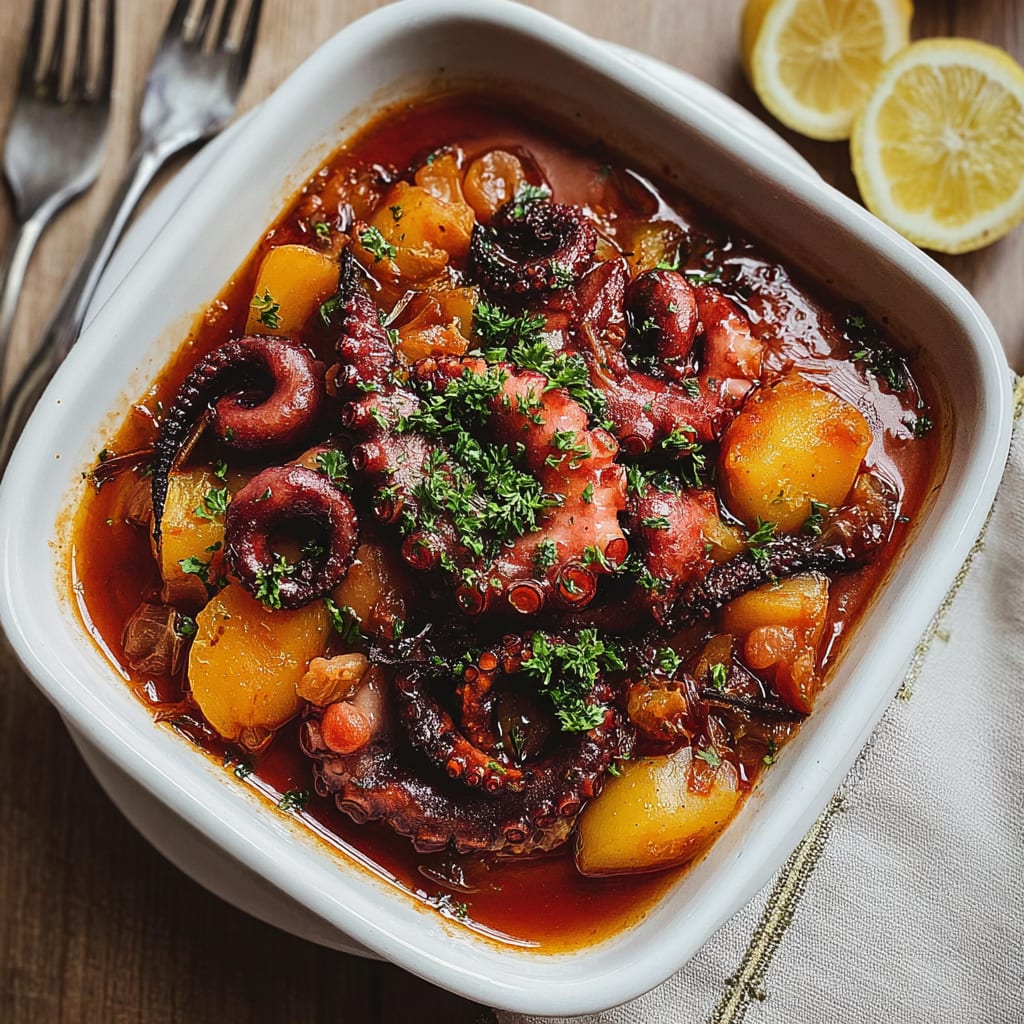
Imagine diving into a bowl of Greek Octopus Stew, where tender octopus mingles with a luscious tomato sauce, bursting with the warmth of aromatic spices that dance on your palate. The moment you take a bite, the rich flavors transport you to sun-kissed shores, where every mouthful is a celebration of the Mediterranean sea and its vibrant culinary heritage.
As I recall my first taste of this dish at a bustling seaside taverna, the laughter and chatter around me faded as I savored each spoonful. Perfect for gatherings or cozy dinners, Greek Octopus Stew promises not just nourishment but a delightful experience that leaves you craving more, making it an unforgettable centerpiece for any occasion.
Why Is Greek Octopus Stew (Octopus Stifado) So Irresistibly Good?
Tender octopus slowly braised in a rich tomato sauce creates a dish that’s both comforting and gourmet. Aromatic spices like cinnamon and oregano elevate the flavor profile, making each bite unforgettable. Versatile and crowd-pleasing, this stew impresses at dinner parties or cozy family meals. Effortless preparation with just 30 minutes of hands-on time means you can enjoy more moments with loved ones. Plus, the mouthwatering aroma that fills your kitchen will have everyone eagerly awaiting the feast!
Greek Octopus Stew (Octopus Stifado) Ingredients
- For the Octopus
2.2 lb (1 kg) octopus (cleaned and cut into pieces) – Choose fresh octopus for the best flavor and tenderness in your Greek Octopus Stew.
- For the Cooking Base
2 tablespoons olive oil – Use extra virgin olive oil for a rich, authentic taste that complements the stew beautifully.
2 medium onions (chopped) – Sweet onions will add depth and balance to the robust flavors of the stew.
4 cloves garlic (minced) – Freshly minced garlic enhances the aroma and adds a lovely savory touch to your dish.
- For the Sauce
400 g canned tomatoes (crushed) – Opt for high-quality canned tomatoes to ensure a rich, flavorful sauce that’s essential for this recipe.
1 cup red wine – A good dry red wine not only adds flavor but also helps tenderize the octopus, making it melt-in-your-mouth delicious.
- For Seasoning
2 teaspoons dried oregano – This herb is a staple in Greek cuisine, adding a fragrant earthiness to the stew.
1 teaspoon cinnamon – A pinch of cinnamon introduces warmth and depth, enhancing the overall flavor profile.
2 bay leaves – These leaves infuse subtle aromatic notes during cooking; remember to remove them before serving.
- To Taste
Salt to taste – Adjust according to your preference; salt enhances all the flavors in your Greek Octopus Stew.
Pepper to taste – Freshly cracked pepper brings a bit of heat and complexity that rounds out this delightful dish.
Step-by-Step Greek Octopus Stew (Octopus Stifado)
1. Heat olive oil in a large pot over medium heat. Add the chopped onions and sauté until they become translucent, about 5 minutes. This sets a flavorful base for your stew.
2. Add minced garlic and cook for another minute. The aroma will be delightful, creating a warm and inviting atmosphere in your kitchen.
3. Stir in the octopus pieces and cook for about 5 minutes. You’ll see the octopus change color, signaling it’s time to move on to the next step.
4. Pour in the red wine and let it simmer for 10 minutes. This will infuse the dish with rich flavors while allowing the alcohol to evaporate, leaving behind its essence.
5. Add crushed tomatoes, oregano, cinnamon, bay leaves, salt, and pepper. Stir well to combine all these beautiful ingredients into a harmonious mix that captures the heart of Greek cooking.
6. Cover and let it cook on low heat for about 1.5 to 2 hours, until the octopus is tender. You’ll know it’s ready when you can easily pierce it with a fork—this slow cooking process deepens those delicious flavors.
7. Remove bay leaves before serving. This final touch ensures every bite is enjoyable without any surprises!
Optional: Garnish with fresh parsley for a pop of color and an extra layer of flavor.
Exact quantities are listed in the recipe card below.
Expert Tips
- Octopus Preparation: Ensure the octopus is cleaned properly. A well-prepared octopus will yield a tender and flavorful Greek Octopus Stew (Octopus Stifado).
- Oil Temperature: Sauté onions over medium heat to avoid burning. This step builds a sweet, aromatic base for your stew.
- Garlic Timing: Add minced garlic just after the onions become translucent. Cooking it too long can lead to bitterness in your dish.
- Wine Quality: Use a good quality red wine that you enjoy drinking. This will enhance the depth of flavor in your stew.
- Simmering Time: Resist the urge to rush the cooking time. Slow simmering for 1.5 to 2 hours is key for achieving tender octopus.
- Seasoning Balance: Taste before serving and adjust salt and pepper as needed. Seasoning enhances the rich flavors of the tomatoes and spices.
How to Store and Freeze Greek Octopus Stew (Octopus Stifado)
- Fridge: Store your Greek Octopus Stew in an airtight container for up to 3 days. Make sure it cools completely before sealing to maintain freshness.
- Freezer: For longer storage, freeze the stew in a freezer-safe container for up to 2 months. Leave some space at the top for expansion as it freezes.
- Thawing: To enjoy later, thaw your frozen stew overnight in the fridge. Reheat gently on the stovetop or microwave until heated through.
- Reheating: When reheating, add a splash of water or extra wine to regain its rich consistency. Heat until steaming hot, about 5-10 minutes on medium heat.
Greek Octopus Stew (Octopus Stifado) Your Way
Feel free to get creative and make this dish your own with these delightful twists!
- Spicy Kick: Add a pinch of red pepper flakes for an exciting heat that complements the rich flavors beautifully. A little spice can elevate the overall experience, making each bite a thrilling adventure.
- Herb Infusion: Swap dried oregano for fresh herbs like parsley or dill to bring a vibrant freshness to the dish. Fresh herbs not only enhance the flavor but also add a lovely aroma that fills your kitchen.
- Tomato Upgrade: Use fresh tomatoes instead of canned for a brighter, more intense taste. Simply blanch and peel them before crushing; this step adds a homemade touch that’s sure to impress.
- Wine Variation: Experiment with white wine or even a splash of brandy for a different depth of flavor. Each type of wine will impart its unique character, creating a stew that’s truly one-of-a-kind.
- Onion Options: Try using shallots in place of onions for a subtler sweetness and refined texture. This small change can transform the dish into something elegant yet comforting.
- Mediterranean Twist: Add olives or capers for a briny punch that evokes the spirit of the Mediterranean. These ingredients will infuse the stew with layers of flavor, enhancing its complexity.
- Vegetarian Delight: Substitute octopus with hearty vegetables like eggplant or mushrooms for a delicious plant-based version. This twist allows everyone at the table to enjoy the warm spices while keeping it meat-free.
- Nutty Flavor: Incorporate toasted pine nuts or almonds as a topping for added crunch and richness. The contrasting textures will provide an unexpected delight in every spoonful.
Make Ahead Options
This Greek Octopus Stew (Octopus Stifado) is not only a delightful dish for family gatherings but also perfect for meal prep enthusiasts. To save time, you can clean and cut the octopus pieces up to 24 hours in advance, storing them in the refrigerator. Additionally, chop the onions and mince the garlic ahead of time; both can be stored together in an airtight container for up to 3 days. When you’re ready to cook, simply heat the olive oil, sauté the onions until translucent, then add the garlic and octopus as per the cooking instructions. Pour in the red wine, let it simmer, and finish with crushed tomatoes and spices. This way, you can enjoy a comforting Greek meal with minimal last-minute effort!
Greek Octopus Stew (Octopus Stifado) Recipe FAQs
What type of octopus should I use for this stew?
For the best flavor and texture, choose fresh or frozen octopus. If using frozen, make sure it’s completely thawed before cooking. Look for octopus that is firm and has a pleasant smell—avoid any that appears slimy or has an off odor.
Can I substitute the red wine in this recipe?
Absolutely! If you prefer not to use red wine, you can substitute it with a splash of red wine vinegar mixed with water or vegetable broth. This will still provide a depth of flavor but keep in mind the taste may be slightly different from the traditional recipe.
How can I store leftovers of Greek Octopus Stew?
Once cooled, transfer any leftovers to an airtight container and store them in the refrigerator for up to 3 days. Make sure to let it cool completely before sealing to prevent condensation, which can affect the stew’s texture.
Is it possible to freeze Octopus Stifado?
Yes! You can freeze Greek Octopus Stew for up to 3 months. Just ensure it’s in a freezer-safe container. To reheat, let it thaw in the refrigerator overnight and then gently warm it on the stovetop over low heat until heated through.
What if my octopus isn’t tender after cooking?
If your octopus isn’t tender after the initial 1.5 to 2 hours of cooking, it likely needs more time. Continue simmering on low heat, checking every 15 minutes until it reaches that melt-in-your-mouth tenderness you’re aiming for.
How many servings does this recipe yield?
This delightful Greek Octopus Stew serves about 4 people, making it perfect for a cozy family dinner or a small gathering with friends. Each serving contains approximately 350 calories, so you can enjoy this rich dish without too much guilt!

Greek Octopus Stew (Octopus Stifado)
Ingredients
Method
- Heat olive oil in a large pot over medium heat. Add chopped onions and sauté until translucent.
- Add minced garlic and cook for another minute.
- Stir in the octopus pieces and cook for about 5 minutes.
- Pour in the red wine and let it simmer for 10 minutes.
- Add crushed tomatoes, oregano, cinnamon, bay leaves, salt, and pepper. Stir well.
- Cover and let it cook on low heat for about 1.5 to 2 hours, until the octopus is tender.
- Remove bay leaves before serving.