

Imagine sinking your spoon into a bowl of Basil Chicken Coconut Curry, where the creamy richness of coconut milk envelops tender chicken, and fragrant basil dances through each bite, creating a symphony of flavor that tantalizes your taste buds. The aroma wafts through the air, instantly transporting you to a sun-soaked kitchen, filled with laughter and the promise of a delicious meal shared with loved ones.
This dish holds a special place in my heart, reminding me of cozy family dinners where stories flowed as freely as the curry itself. Perfect for weeknight dinners or special occasions, this Basil Chicken Coconut Curry promises an unforgettable culinary experience that will have everyone coming back for seconds—and possibly thirds—of its irresistible goodness.
Why Is Basil Chicken Coconut Curry So Irresistibly Good?
Creamy coconut milk envelops tender chicken, creating a rich and satisfying dish. Fresh basil leaves add a vibrant burst of flavor, elevating each bite. Quick to prepare, this recipe is perfect for busy weeknights, taking just 15 minutes of prep and 30 minutes of cook time. Versatile enough to pair with rice or noodles, it’s sure to impress family and friends alike. Packed with aromatic ginger and garlic, every mouthful bursts with delightful spices that will have everyone returning for seconds!
Ingredients for Basil Chicken Coconut Curry
- For the Chicken
- 1 lb chicken breast (cut into bite-sized pieces) – Use tender chicken breast for a juicy texture that absorbs the aromatic flavors beautifully.
- For the Sauce
- 1 can coconut milk – This creamy base adds richness and balances the spice of the curry paste perfectly.
- 2 tablespoons curry paste (red or green) – Choose your preferred heat level to make this Basil Chicken Coconut Curry just right for your taste.
- 1 cup chicken broth – Enhances the overall flavor while keeping the dish hearty and satisfying.
- For the Aromatics
- 1 medium onion (chopped) – Adds a sweet, savory foundation that complements the spices in the curry.
- 2 cloves garlic (minced) – Imparts a fragrant aroma that elevates your dish to new heights of deliciousness.
- 1 tablespoon ginger (grated) – Fresh ginger adds warmth and a bit of zing, bringing all the flavors together.
- For the Finish
- 1 cup basil leaves (fresh) – Stir in fresh basil at the end for a burst of color and fresh flavor that brightens every bite.
- 1 tablespoon vegetable oil – Use this for sautéing your aromatics to enhance their natural flavors before adding other ingredients.
How to Make Basil Chicken Coconut Curry
1. Heat the vegetable oil in a large skillet over medium heat. This will create a warm base for your aromatic ingredients, setting the stage for a delicious dish.
2. Add the chopped onion, garlic, and ginger; sauté until the onion is translucent. You’re looking for a soft, inviting aroma that fills your kitchen in about 5 minutes.
3. Stir in the curry paste and cook for another minute. This step releases vibrant flavors that will enhance your Basil Chicken Coconut Curry.
4. Add the chicken pieces and cook until no longer pink, around 5-7 minutes. Ensure each piece is well-coated with the aromatic mix for maximum flavor.
5. Pour in the coconut milk and chicken broth; bring to a simmer. This creamy sauce should bubble gently as it transforms into a comforting base.
6. Add the basil leaves and cook for an additional 5 minutes. The fresh basil will infuse its fragrant notes into the curry, creating a delightful freshness.
7. Serve hot over rice or noodles. The combination of tender chicken and creamy sauce over your favorite starch makes for a truly heartwarming meal.
Optional: Top with extra fresh basil leaves for added color and flavor!
Exact quantities are listed in the recipe card below.
Pro Tips for Basil Chicken Coconut Curry
- Fresh Basil Matters: Use fresh basil leaves for the best flavor. Dried basil won’t provide the same vibrant aroma and taste.
- Sautéing Technique: Ensure the onion, garlic, and ginger are sautéed until translucent; this enhances the curry’s depth of flavor.
- Chicken Cooking Time: Cook the chicken pieces thoroughly until no longer pink; undercooked chicken can ruin your delicious Basil Chicken Coconut Curry.
- Coconut Milk Consistency: Stir in the coconut milk gently to maintain its creamy texture; avoid boiling it vigorously to prevent separation.
- Adjusting Spice Levels: Taste as you go! You can add more curry paste if you prefer a spicier dish, but do it gradually.
- Serving Suggestions: Serve over fluffy rice or noodles to soak up all that rich, flavorful sauce—don’t let it go to waste!
How to Store and Freeze Basil Chicken Coconut Curry
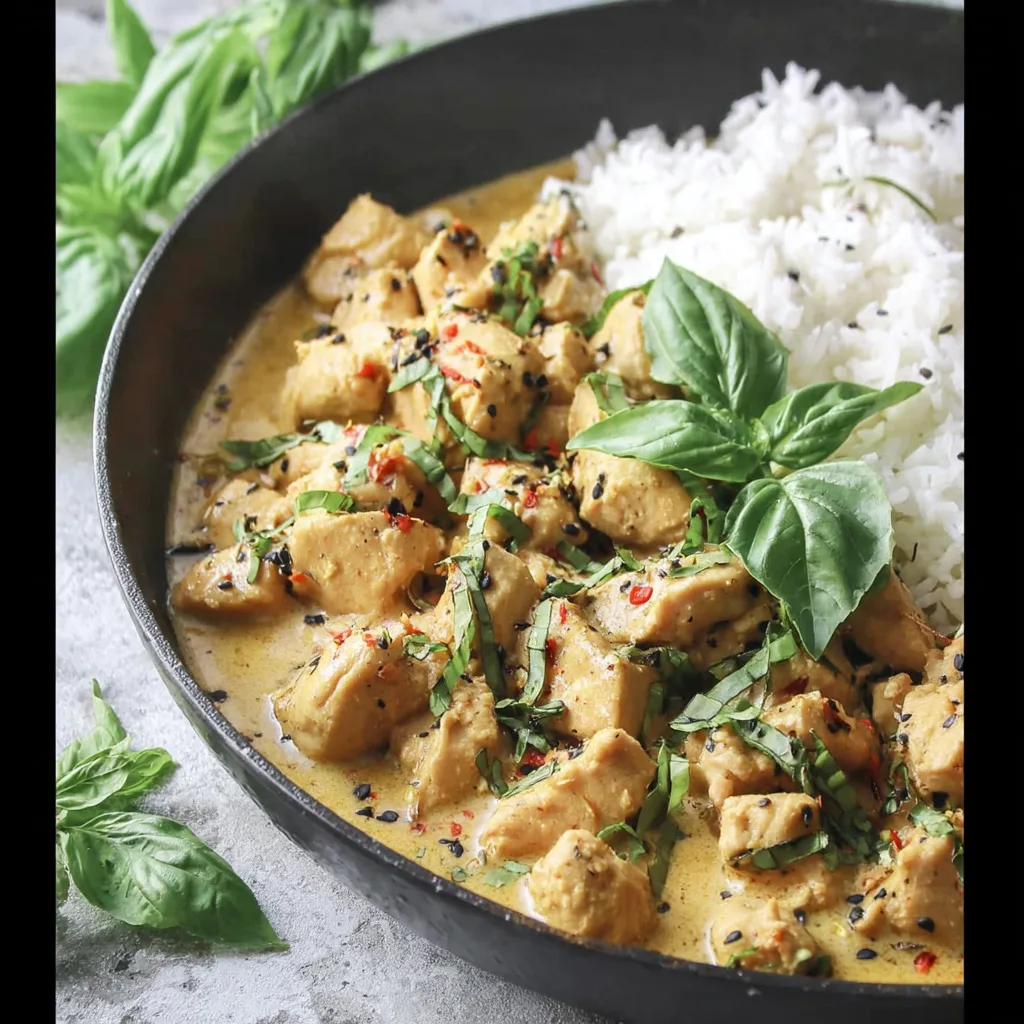
- Fridge: Store leftovers in an airtight container for up to 3 days. Make sure to let the curry cool completely before sealing to maintain its creamy texture.
- Freezer: You can freeze Basil Chicken Coconut Curry for up to 3 months. Portion it into freezer-safe bags or containers, removing as much air as possible before sealing.
- Thawing: To enjoy your frozen curry, thaw it overnight in the fridge. Reheat gently on the stove over low heat, stirring occasionally until warmed through.
- Reheating: If you have refrigerated leftovers, reheat the curry on the stovetop or in the microwave, adding a splash of chicken broth if needed for creaminess.
Basil Chicken Coconut Curry Your Way
Feel free to let your creativity shine and customize this dish to suit your taste preferences!
- Vegetable Boost: Replace chicken with mixed vegetables like bell peppers, carrots, and zucchini for a hearty vegetarian option. This twist not only makes the curry vibrant but also packed with nutrients. The fresh basil will complement the veggies beautifully.
- Spicy Kick: Add sliced chilies or a dash of chili flakes to amp up the heat. The extra spice will create a tantalizing contrast with the creamy coconut milk, making every bite an adventure for your taste buds.
- Coconut Milk Swap: For a lighter version, use light coconut milk instead of regular. This alternative reduces calories while still delivering that rich coconut flavor. Your curry will be just as satisfying but with a bit less creaminess.
- Flavor Explosion: Experiment by adding lime juice or zest for a zesty brightness that elevates the overall flavor profile. The citrus notes will dance harmoniously with the sweet and savory elements of the dish.
- Protein Switch: Try shrimp or tofu instead of chicken for a seafood or vegetarian delight. Each protein brings its unique texture and flavor, allowing you to enjoy this dish in different ways without sacrificing its comforting essence.
- Noodle Addition: Serve your curry over rice noodles instead of traditional rice for a delightful twist. This change adds an exciting texture and makes it feel like a completely new dish, perfect for those who love slurping their meals.
- Nutty Flavor: Stir in a tablespoon of peanut butter for an unexpected nutty depth. The richness of peanut butter enhances the creaminess and pairs wonderfully with basil, creating a harmonious blend of flavors.
- Herbal Variation: Incorporate cilantro or mint alongside basil for an aromatic lift. These herbs introduce fresh notes that complement the curry beautifully, adding layers of complexity to each spoonful.
Make Ahead Options
This Basil Chicken Coconut Curry is perfect for meal prep, allowing you to enjoy a delicious dish throughout the week with minimal fuss. You can chop the chicken breast into bite-sized pieces and store it in the fridge for up to 24 hours. Additionally, the onion, garlic, and ginger can be minced and prepared ahead of time, staying fresh for about three days in an airtight container. To get a head start on cooking, complete steps one through four—sautéing the aromatics and browning the chicken—up to 24 hours in advance. When you’re ready to serve, simply add the coconut milk and chicken broth to simmer with the basil leaves for that creamy finish, ensuring your meal is as delightful as when it was first made!
Basil Chicken Coconut Curry Recipe FAQs
What type of chicken works best for this recipe?
Using boneless, skinless chicken breast cut into bite-sized pieces is ideal for this Basil Chicken Coconut Curry. It cooks quickly and absorbs the flavors beautifully. If you prefer dark meat, thighs work well too; just cut them into similar-sized pieces to ensure even cooking.
Can I substitute the coconut milk with something else?
While coconut milk provides a creamy texture and rich flavor, you can substitute it with unsweetened almond milk or cashew cream for a lighter version. Keep in mind that the flavor will differ slightly, so consider adding a splash of lime juice to enhance the taste.
How should I store leftover curry?
Store leftovers in an airtight container in the refrigerator for up to 3 days. Make sure to let it cool completely before sealing. When reheating, do so gently over low heat on the stovetop to maintain its creamy consistency.
Is it possible to freeze Basil Chicken Coconut Curry?
Absolutely! This dish freezes well. Cool it completely and transfer it to freezer-safe containers. You can freeze it for up to 3 months. When ready to enjoy, thaw overnight in the fridge and reheat on the stove until warmed through.
What if my curry is too spicy?
If your curry turns out spicier than you’d like, stir in a little more coconut milk or add sugar (1 teaspoon at a time) to balance the heat. Serve it over rice or noodles as they will help tone down the spice as well.
How many servings does this recipe yield?
This delicious Basil Chicken Coconut Curry serves 4 people, making it perfect for family dinners or meal prep for the week ahead. Each serving contains about 350 calories, allowing you to enjoy comfort food without too much guilt!
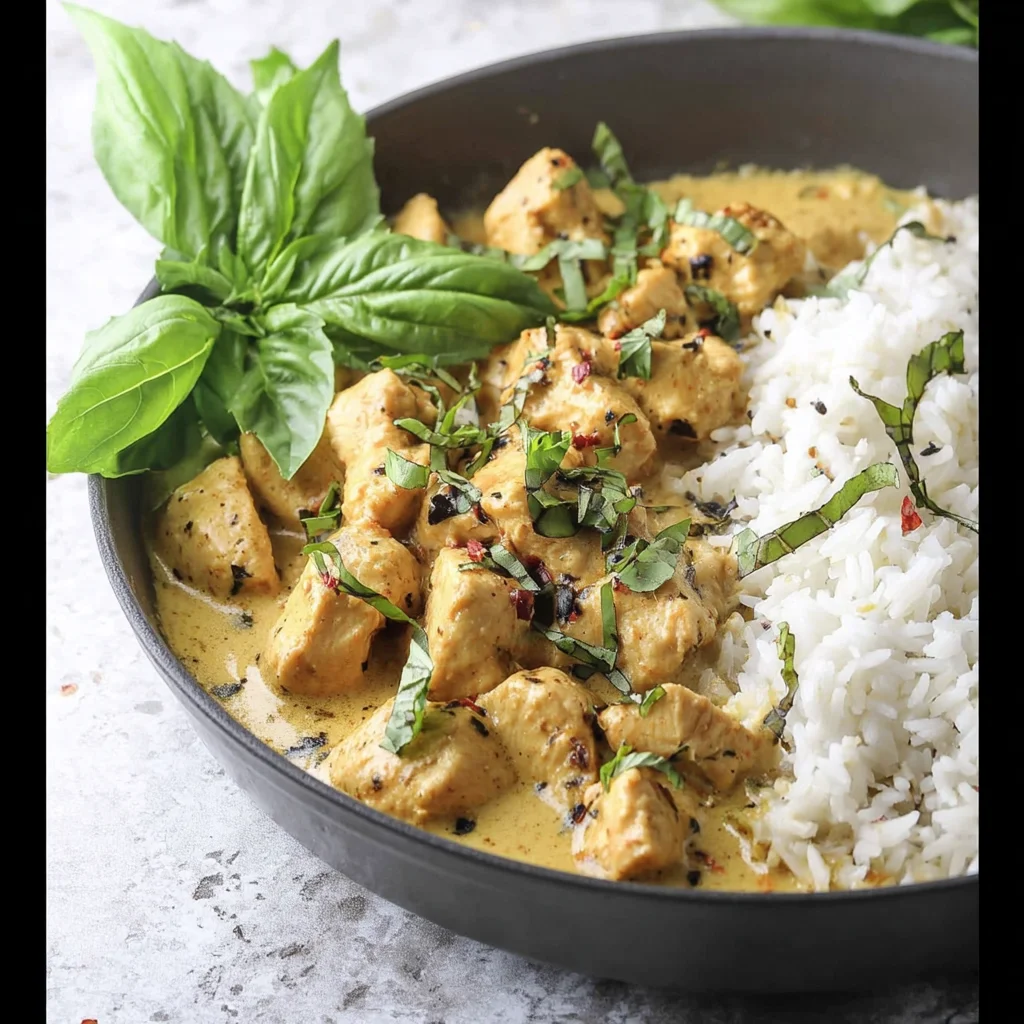
Basil Chicken Coconut Curry
Ingredients
Method
- Heat the vegetable oil in a large skillet over medium heat.
- Add the chopped onion, garlic, and ginger; sauté until the onion is translucent.
- Stir in the curry paste and cook for another minute.
- Add the chicken pieces and cook until no longer pink.
- Pour in the coconut milk and chicken broth; bring to a simmer.
- Add the basil leaves and cook for an additional 5 minutes.
- Serve hot over rice or noodles.